
Throwback Thursday #MosselbayToyota #MBToyota
:star #MosselbayToyota #MBToyota #ThrowbackThursday
Throwback Thursday #MosselbayToyota #MBToyota Read More »
:star #MosselbayToyota #MBToyota #ThrowbackThursday
Throwback Thursday #MosselbayToyota #MBToyota Read More »

Front left: Brian Fuchs Front right: Chris du Plooy Behind the desk: Johan van Rensburg – Workshop Manager Early mornings with the Toyota Geniuses. Have a great day gentleman! #MosselbayToyota #MBToyota
Throwback Thursday #MosselbayToyota #MBToyota Read More »
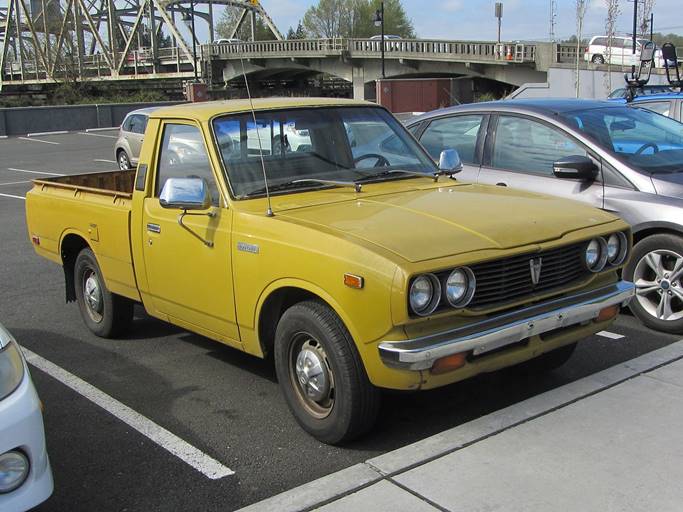
Second generation (N20; 1972–1978) In May 1972, the 1973 model year Hilux was released as the RN20. Nicknamed the "ロケハイ (RokeHi) a Portmanteau of Rocket Hilux", a more comfortable interior was specified along with exterior updates. A 2.25 m (7.4 ft) "long bed" was an option for the first time in North America, although such a version had been available worldwide since April 1969. This received the "RN25" chassis code. The 2.0-liter 18R engine was available in Japan as well, also with an available three-speed automatic transmission. The 2.0-litre automatic only managed a 136.1 km/h (84.6 mph) top speed in a period South African road test, in spite of a claimed 89 kW (121 PS). The Hilux was radically redesigned in 1975 to be larger and with increased standard equipment. In North America, the new version also meant the introduction of the considerably larger (2.2 L) 20R engine and the SR5 upscale trim package. A five-speed manual transmission became optional. In North America, the Hilux name was fully phased out in favor of "Truck" by that year, having been dropped from brochures and advertising starting in 1973. Some North American motor-coach manufacturers began building Toyota motor-homes with this chassis. #MosselbayToyota #SecondGeneration #Hilux
Throwback Thursday #MosselbayToyota #MBToyota Read More »

After World War II, Japan experienced extreme economic difficulty. Commercial passenger car production started in 1947 with the model SA. The company was on the brink of bankruptcy by the end of 1949, but the company eventually obtained a loan from a consortium of banks which stipulated an independent sales operation and elimination of "excess manpower" In June 1950, the company produced only 300 trucks and was on the verge of going out of business. The management announced layoffs and wage reductions, and in response the union went on a strike that lasted two months. The strike was resolved by an agreement that included layoffs and pay reductions but also the resignation of the president at the time, Kiichiro Toyoda, Toyoda was succeeded by Taizo Ishida, who was the chief executive of the Toyoda Automatic Loom company. The first few months of the Korean War resulted in an order of over 5,000 vehicles from the US military, and the company was revived. Ishida was credited for his focus on investment in equipment. One example was the construction of the Motomachi Plant in 1959, which gave Toyota a decisive lead over Nissan during the 1960s. In 1950, a separate sales company, Toyota Motor Sales Co., was established (which lasted until July 1982). In April 1956, the Toyopet dealer chain was established. In 1957, the Crown became the first Japanese car to be exported to the United states and Toyota’s American and Brazillian divisions, Toyota Motor Sales Inc. and Toyota do Brasil S.A., were also established. #MosselbayToyota #mbtoyota #History #ModeSA #Crown
Throwback Thursday #MosselbayToyota #mbtoyota Read More »
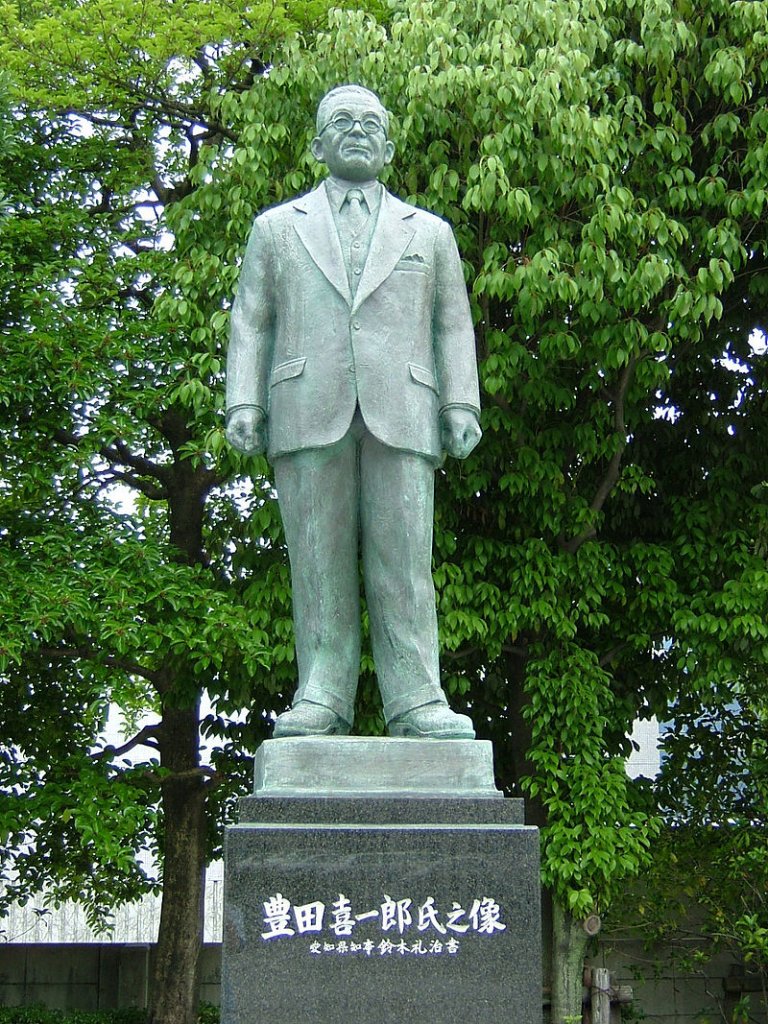
The history of Toyota started in 1933 with the company being a division of Toyoda Automatic Loom Works devoted to the production of automobiles under the direction of the founder’s son, Kiichiro Toyoda. Kiichiro Toyoda had travelled to Europe and the United States in 1929 to investigate automobile production and had begun researching gasoline-powered engines in 1930. Toyoda Automatic Loom Works was encouraged to develop automobile production by the Japanese government, which needed domestic vehicle production, due to the war with China. In 1934, the division produced its first Type A Engine, which was used in the first Model A1 passenger car in May 1935 and the G1 truck in August 1935. Production of the Model AA passenger car started in 1936. Early vehicles bear a striking resemblance to the Dodge Power Wagon and Chevrolet, with some parts actually interchanging with their American originals. Although the Toyota Group is best known today for its cars, it is still in the textile business and still makes automatic looms, which are now computerized, and electric sewing machines which are available, worldwide. #mosselbaytoyota #mbtoyota #throwbackthursday #history #toyota
Throwback Thursday #MosselbayToyota #mbtoyota Read More »
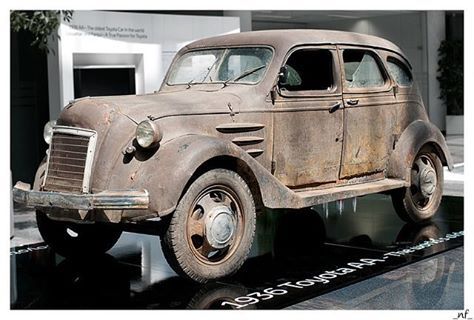
The A1 was the first prototype passenger car built by the company that became Toyota. It was redesigned and put into production as Toyota’s first production cars, the AA sedan and the AB cabriolet. These were succeeded by the similar AE, AC and BA sedans. The AA was a fully enclosed 4-door sedan that largely copied the design of the Chrysler built DeSoto Airflow. It had a metal body on a metal ladder chassis. The metal body was of modern construction compared to the fabric-over-wooden-frame bodies used on cars designed in the 1920s. The rear doors opened backwards as suicide doors. The front glass spanned the entire width of the body in a single pane. The AB was identical to the AA except that it was a convertible with a folding cloth roof, the rear doors opened forwards like conventional doors and the front glass could fold down onto the engine compartment. Discovery of the oldest known AA In 2008 an original AA was found in Russia in derelict and heavily modified condition, with undercarriage and drivetrain from a GAZ-51 truck. It is now displayed, still in this condition, in the Louwman Museum in the Netherlands.[4][5] #mosselbaytoyota #mbtoyota #throwbackthursday
Throwback Thursday #mbtoyota #throwback Read More »